


Books have been my greatest refuge lately. Help yourselves to my latest delights in the field of trauma therapy and resilience. I’ve listed 5 of my recent book discoveries for you here (and more are waiting in line).
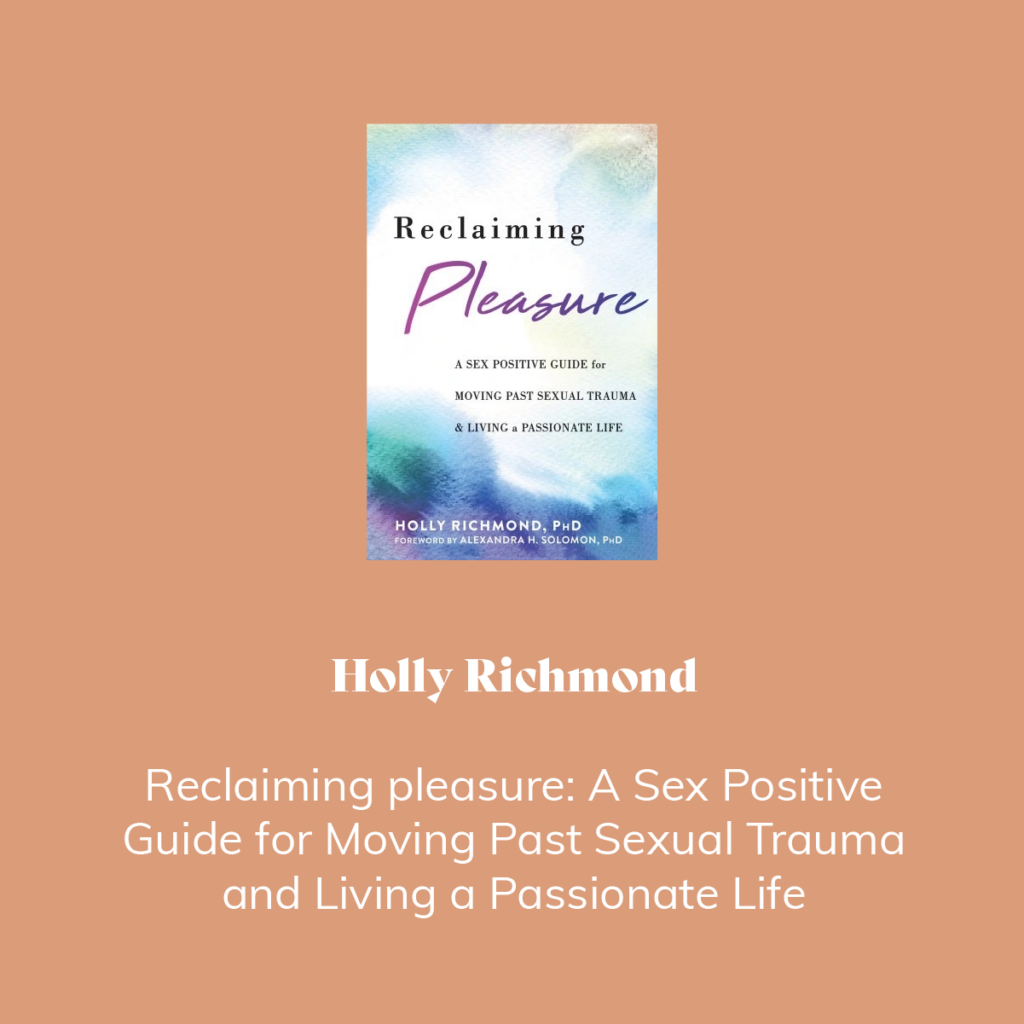
- On vitality, which cannot exist without a healthy relationship with sexuality, and on Holly Richmond’s book “Reclaiming Pleasure”

We live in an environment where talking about sexuality is taboo, unless it is sexuality that has been commercialized, ridiculed, or tailored to a patriarchal vision of the world. In this area we are fed a great many “no’s,” and we are very hungry for a “yes” when it comes to conversations about sexuality.
Sexual health is not an extra; it is a necessity.
Your sexuality is as unique to you as the color of your eyes, your hair, your complexion, or the traits of your personality.
Trauma is not the only thing that lives in your body. Pleasure, passion, and great sex are here too.
Your truth has its boundaries. Remember that, whether you are talking about something bad that happened or something good that is yet to happen.
quotes from the book
“You are more than what happened to you, however terrible it was” — this is probably the most important message of this book. It is a book about how wide our lives are: just as they can hold (unfortunately!) abuse, loss, and trauma, they can also hold healing, reaching for aliveness and pleasure, ease and joy. It is a book about how trauma can imprison us in many “no’s,” while full healing also means reaching for a “yes.” About how healthy sexuality is the kind that slips out of rigid norms yet lets us stay integrated and respectful of ourselves.
It is a book about courage. About calling things by their name rather than veiling the abuse we have suffered (the author wonders, among other things, why people so often say things like “he touched me” rather than, plainly, “he abused me.”). About the courage to stand behind your inner life (including your desires, fantasies, and fears) instead of being ashamed of it and cutting yourself off from it. About actively seeking out an environment in which I can let go of control and still feel safe. And above all, about the boldness to take care of your sexual health, without which — according to the author — there can be no talk of full health.
P.S. I was delighted to hear that the book will be published in Polish within the next few months, thanks to Gdańskie Wydawnictwo Psychologiczne. So keep an eye on them if you need inspiration for working with people who have experienced sexual trauma, if you have experienced it yourselves, or if you are looking for a wise guide on the subject for someone close to you.
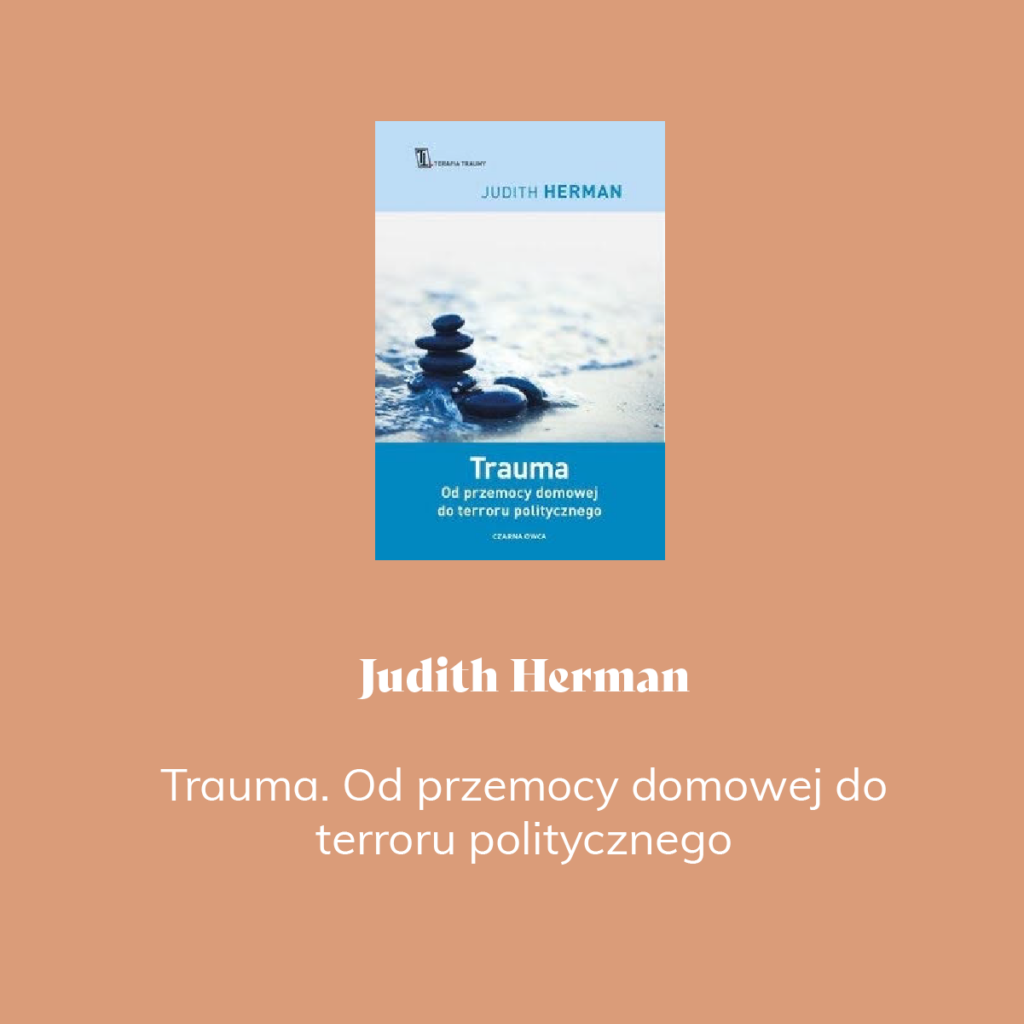
2. On a story of trauma that is not only psychological but also social and political. And on the need for a diagnosis of complex trauma — in other words, on Judith Herman’s book “Trauma and Recovery: The Aftermath of Violence — From Domestic Abuse to Political Terror”
Witnesses succumb to the dialectic of trauma just as victims do. It is difficult for the one who observes to remain calm and clear-headed.
The history of the study of trauma is a curious history of recurring amnesia.
(…) the strongest motivation for coping with this fear is something stronger than patriotism, abstract ideals, or hatred of the enemy. That something is the love soldiers have for one another.
Trauma arises when action is impossible.
The psychiatrist William Niederland, who worked with Holocaust survivors, observed that changes in identity were a constant feature of the “survivor syndrome.” Most of his patients said, “I am not the same person,” but those in the worst condition simply said, “I am not a person.”
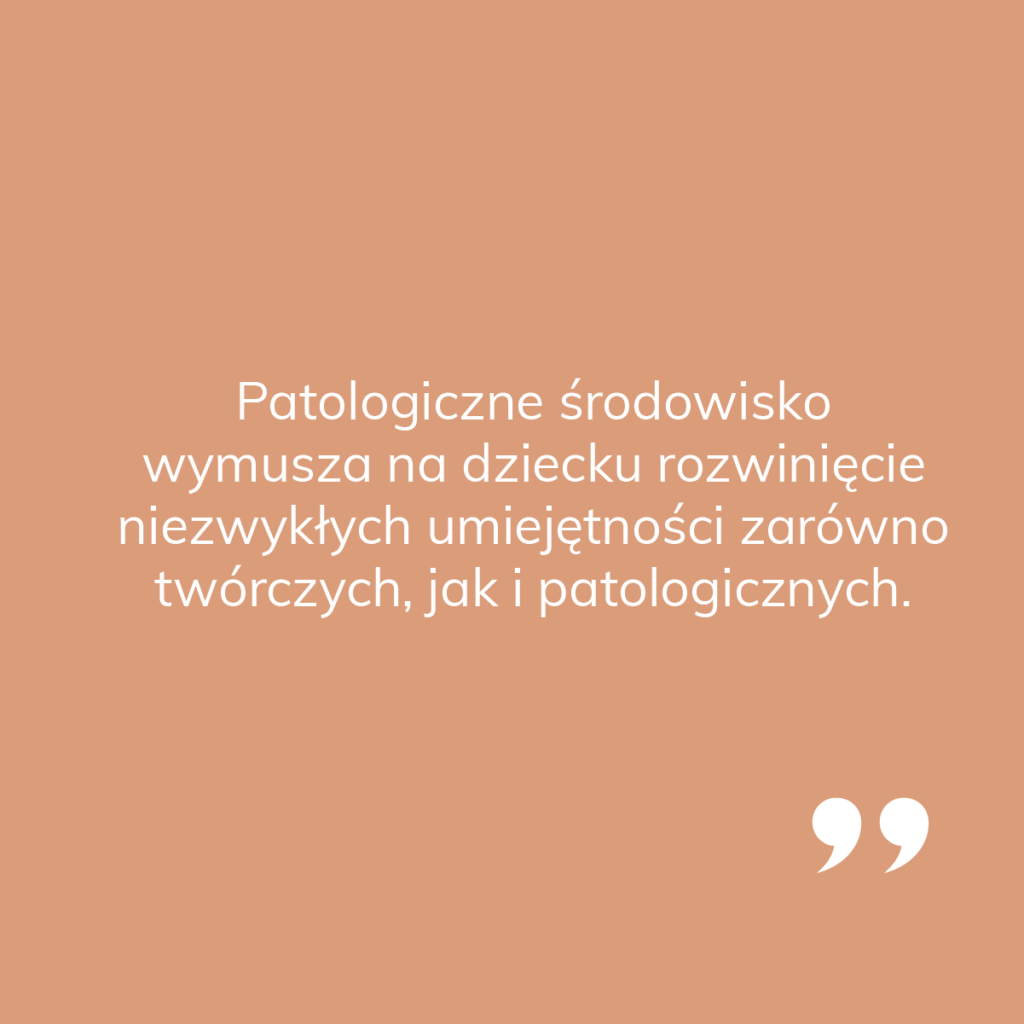
A pathological environment forces the child to develop extraordinary capacities, both creative and pathological.
quotes from the book (trans. Maria Reimann)
This is one of those books about trauma that you have to read. Or, to put it with less of a “should”: if you have little time for reading and need the essence, more depth, and a solid grounding in the subject of trauma, Judith Herman is worth reaching for. Although the book was first published in 1992 (and expanded in 1997), it still has a great deal to contribute to our collective therapeutic worldview.
It is a book for anyone interested in the political, social, and historical determinants of trauma, as well as of complex trauma (of which Herman is, incidentally, a staunch advocate). At the same time, it lets us look into the inner world of traumatized people — into their inner conflicts, impasses, and emotional thrashing about, which becomes self-evident once we set it in the context of what they have lived through. It contains the testimonies of people who have experienced the terror of war, of politics, of forced migration, but also a terror that is very common and still passed over in silence — the terror of domestic violence.
I still can’t fathom how I managed to do therapeutic work without the perspective contained in Judith Herman’s writing. This is not an easy book; at times it is a harrowing one, but it may well be one of the most important psychology books you will ever read.
Judith Herman (2020), Trauma. Od przemocy domowej do terroru politycznego. Warszawa: Czarna Owca. Tł. Maria Reimann
3. On how — in order to survive — we need imagination, and not necessarily the truth; in other words, on the exquisite book “Save Yourself, Life Is Calling”


It is context that gives an event its meaning. Little Maurice, rescued from the Łódź ghetto, recounts: “I was riding on a train for the first time in my life; I was happy. It was taking me to my death.”
I quickly understood that all I had to do was keep silent in order to be able to speak freely.
I naively believed that trauma could be explained by the war. Today I wonder whether the fact that I had to keep silent once peace came did not wound me more deeply.
In every country touched by war, this paradoxical phenomenon can be observed: as long as the war lasts, children seem strong, and then they break down.
Premature adulthood is not a sign of a child’s healthy development — in a child, excessive seriousness is not normal. Adults are mistaken when they think a child has matured too quickly. It is not experience but a loss of vitality. After a traumatic blow, children’s light goes out, and adults admire their maturity.
Abnormal does not mean pathological.
If the “I” is fragile, the “we” serves as a prosthesis.
Your truth has its boundaries. Remember that, whether you are talking about something bad that happened or something good that is yet to happen.
This book belongs in the category of the most beautiful I have read in my entire life. It has both trauma and resilience, pain and moving beyond pain, human bestiality and the highest human morality and goodness. The author is a French psychiatrist and neurologist who, as a child, managed to escape being killed by the Nazis. In the pages of the book he performs a vivisection of his childhood resilience (psychological resilience later became an important subject of his professional inquiry), interweaving it with objectively terrifying events from the earliest years of his life — presented, however, through the subjective eyes of a child who tries to see in the horror around him only what will allow him to survive.
I was not present at my first birth. My body came into the world on July 26, 1937, in Bordeaux. So I have been told. I am forced to believe it — I have no memories of those moments myself.
What I do remember is my second birth. One night I woke up, and my bed was surrounded by armed men. They had come for me; they wanted to kill me. That night, my story began.
This is perhaps above all a book about memory (of trauma, but not only) and about how that memory feeds on the intention with which we use it. It is also a book about how coping is not the same as resilience (coping is constant, while resilience changes over time). And at the same time it is a moving story about reclaiming suppressed anger.
And about how much we need an “empathic witness” for our traumas (that term, as it happens, is Peter Levine’s).
I recommend it wholeheartedly (the book hasn’t been reissued in a long time, but you may find it in your libraries; you can also read its first 30 pages at the link below).
Boris Cyrulnik (2014), Ratuj się, życie wzywa. Warszawa: Czarna Owca. Tł. Ewa Kaniowska
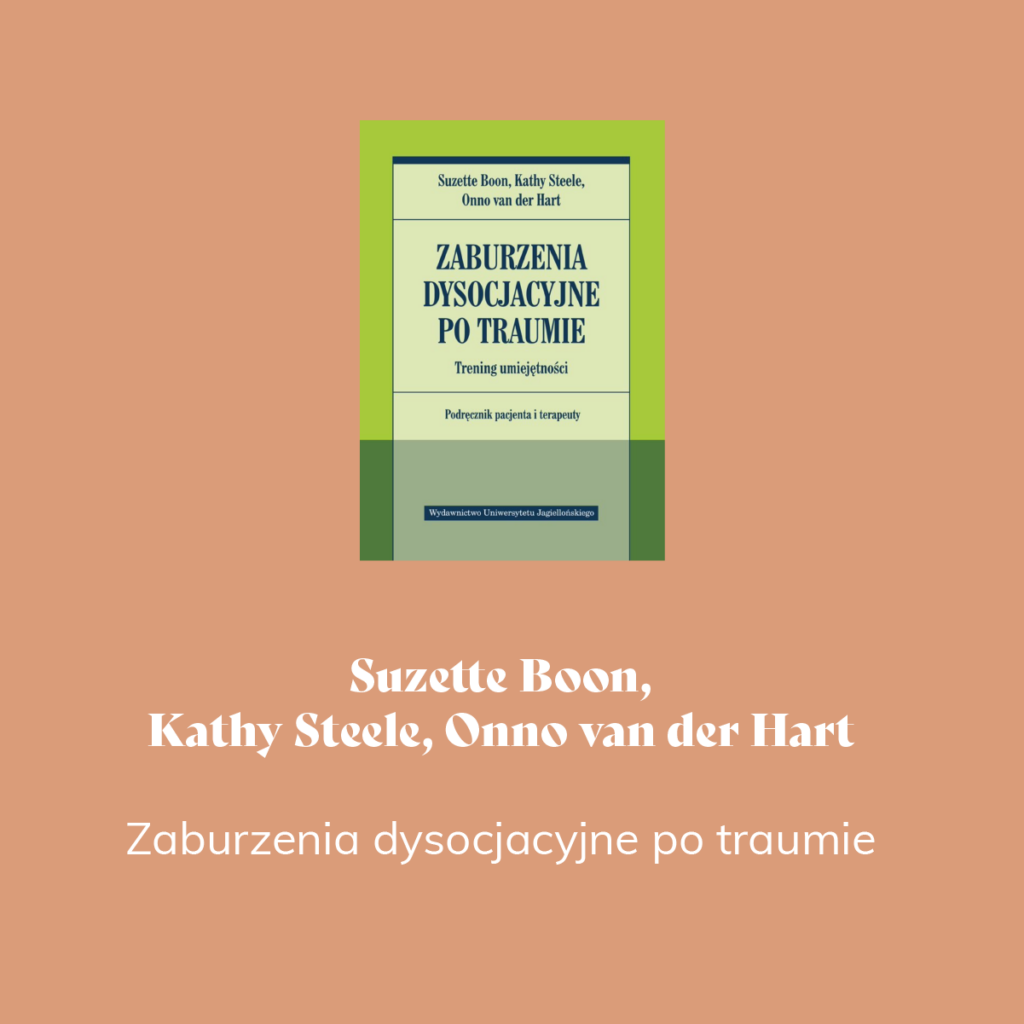
4. On therapy that is synonymous with respect — in other words, on the book “Coping with Trauma-Related Dissociation”

Dissociation is a serious breakdown of integration that disrupts and alters our sense of self and our personality. Our capacity to integrate can be chronically impaired after we have lived through trauma. It can also be disturbed or limited if we are extremely tired, stressed, or seriously ill, although in that case the phenomenon is temporary. Trauma experienced in childhood very profoundly blocks our ability to integrate experiences into a coherent and complete story of our life, because children’s capacity to integrate is far more limited than adults’ and is still developing.
Although symptoms of hypoarousal are not currently counted among the symptoms of PTSD, there is gradually growing awareness and acceptance of the fact that some people respond to trauma with something like a dissociative shutdown rather than hyperarousal. In reality, most people with PTSD alternate between both of these physiological states, which specialists consider dissociative.
A sense of safety can arise when all the parts of our personality agree to give up, at least temporarily, inner conflicts and criticism, and focus on the present moment.
quotes from the book
I am moved (literally, and to tears!) by books that do not stigmatize but instead deepen our understanding of psychological suffering. “Coping with Trauma-Related Dissociation” is a book that lets us see the whole person, and not just the problem they bring to therapy. It is a book that isn’t frightened by how complicated we are inside, and at the same time a book that offers hope of making sense of the fragments of oneself.
And although it is a self-help book, it is at the same time a treatise on the power of integration. And a step-by-step guide (for client and therapist alike) to taming the inner chaos.
Thank you, WUJ, for all these beautiful books on trauma therapy!
Boon, S., Steele, K., van der Hart, O. (2019), Zaburzenia dysocjacyjne po traumie. WUJ.
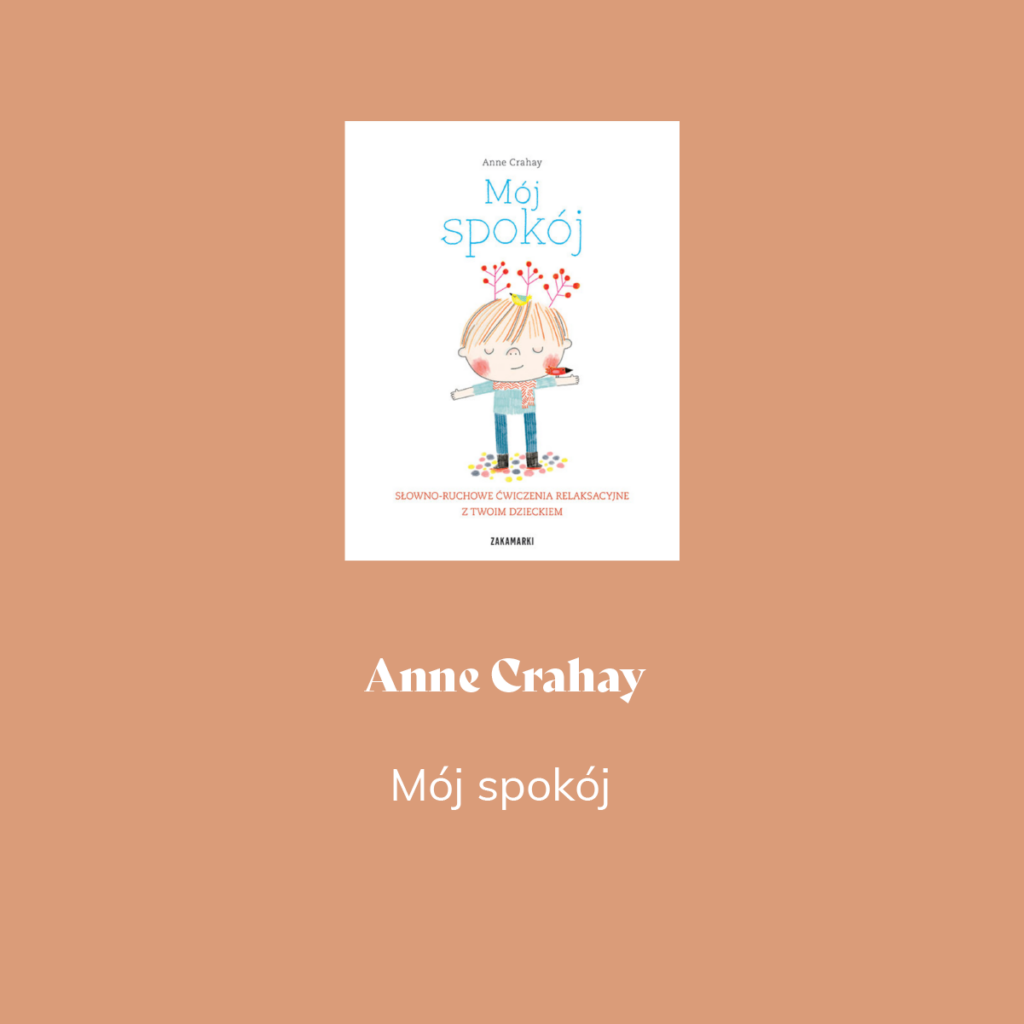
5. On the lightness we carry within us — in other words, on a book for children (and not only for them), “My Calm”

Breath is a great power.
A star in my belly.
My star.
And finally, a book worth keeping on your nightstand at all times (and not only in the children’s room). It is a book that, through breath, image, rhythm, words, and exercises, lets us practice making contact with our inner calm. It is also a book I badly need in September (alongside “My Anger,” by the same author :)). In it you will find 4 movement-and-meditation exercises worth committing to memory forever (and the earlier we start, the better for us).
P.S. I discovered the publisher “Zakamarki” when my son was born ( yeeeears ago), and I have remained faithful to these books (and to the publisher) to this day. I bring them into my workshops and my therapy work, and I look in them for mirrors in which I can see myself (“This Is Something You Can Only Talk About with Rabbits” is another of my discoveries!).
Anne Crahay, tł. Katarzyna Skalska (2021), Mój spokój.
More of my book delights on the subject of trauma and resilience coming soon.
Here you will find the first post in this series.