



We transform pain into the fruits of creative work, and this process is very effective at restoring our balance (a quote from the author’s conversation with Tobi Zausner).
Although religious traditions have been supporting people in their search for the meaning of trauma and loss for thousands of years, psychologists long treated the role of religion in the process of regaining balance with a very large dose of caution.
You have to consciously decide whether you want to live in chaos, confusion, and tragedy, or in comfort, peace, and coherence (a quote from the author’s conversation with Cherry Brown, who lost her son).
quotes from the book
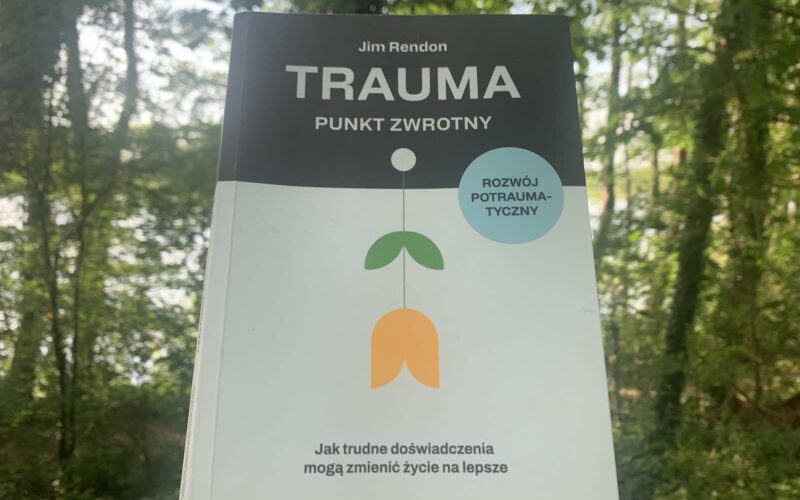
This book does not force anyone to seek flourishing after trauma. That kind of pressure would, after all, be absurd and inhumane. Rather, this book shows the potential of our life, our psyche, and our nervous system. In it the author persuades us that we can keep redefining ourselves, not only on the cognitive level but also on the synaptic and neurochemical one . And that we can do so at any moment in life, including right after the darkest one.
This book should be read alongside Viktor Frankl’s “Man’s Search for Meaning” (which, incidentally, is often quoted in “Upside”), as well as “Radical Responsibility” by Fleet Maull (convicted of drug smuggling, who, from the moment he found himself in his cell, decided to change his life radically and use that experience to change the lives of others). It is a book about healing and growing in spite of the worst. About the fact that “existential frustration” (Frankl’s term) is an important ingredient of a good life, and certainly a signpost pointing toward it. And also about the fact that no one can take away our basic freedom to look at our life creatively and with hope.
The book contains references to history, culture (pop culture included), literature, and myths. It recalls the stories that inhabit our collective consciousness about people who rose like a phoenix from the ashes. My favorite story in the book is the one about Batman, but at the same time about Theodore Roosevelt (it turns out the two stories are closely connected; as we read in the book: “Christopher Nolan — director of the 2008 film The Dark Knight — based his plot in part on the life story of Theodore Roosevelt and advised his lead actor, Christian Bale, to read up on the president’s biography.”).
The main axis of the book, however, is the stories of “ordinary people.” Jim Rendon, a journalist, has conducted hundreds of such conversations in his life. He talked with people who had been through trauma, with their relatives (which, by the way, turns out to be a very important scientific criterion of post-traumatic growth: how a person’s development after trauma is perceived by those close to them), and also with psychologists, psychiatrists, psychotherapists, and researchers. You read “Upside” with flushed cheeks, following the dramatic fates of its protagonists, knowing, too, that each of these stories is heading inevitably toward a terrifying finale. Yet in every case described in the book, that finale turns out to be only the beginning. The beginning of a life that is full, coherent, and richer than before the terrible accident.
I recommend “Upside” to everyone who is struggling with something overwhelming in their life and has found themselves on the dangerous edge of losing their strength and their sense of meaning. I also recommend this book to everyone who deals professionally or academically with the sources of human resilience and growth — here you will find not only scientific studies but also the behind-the-scenes story of how they came about and excerpts from the author’s conversations with researchers (very valuable!).
May word of this book travel far and wide!
I received the book as a gift from the publisher MT Biznes.