


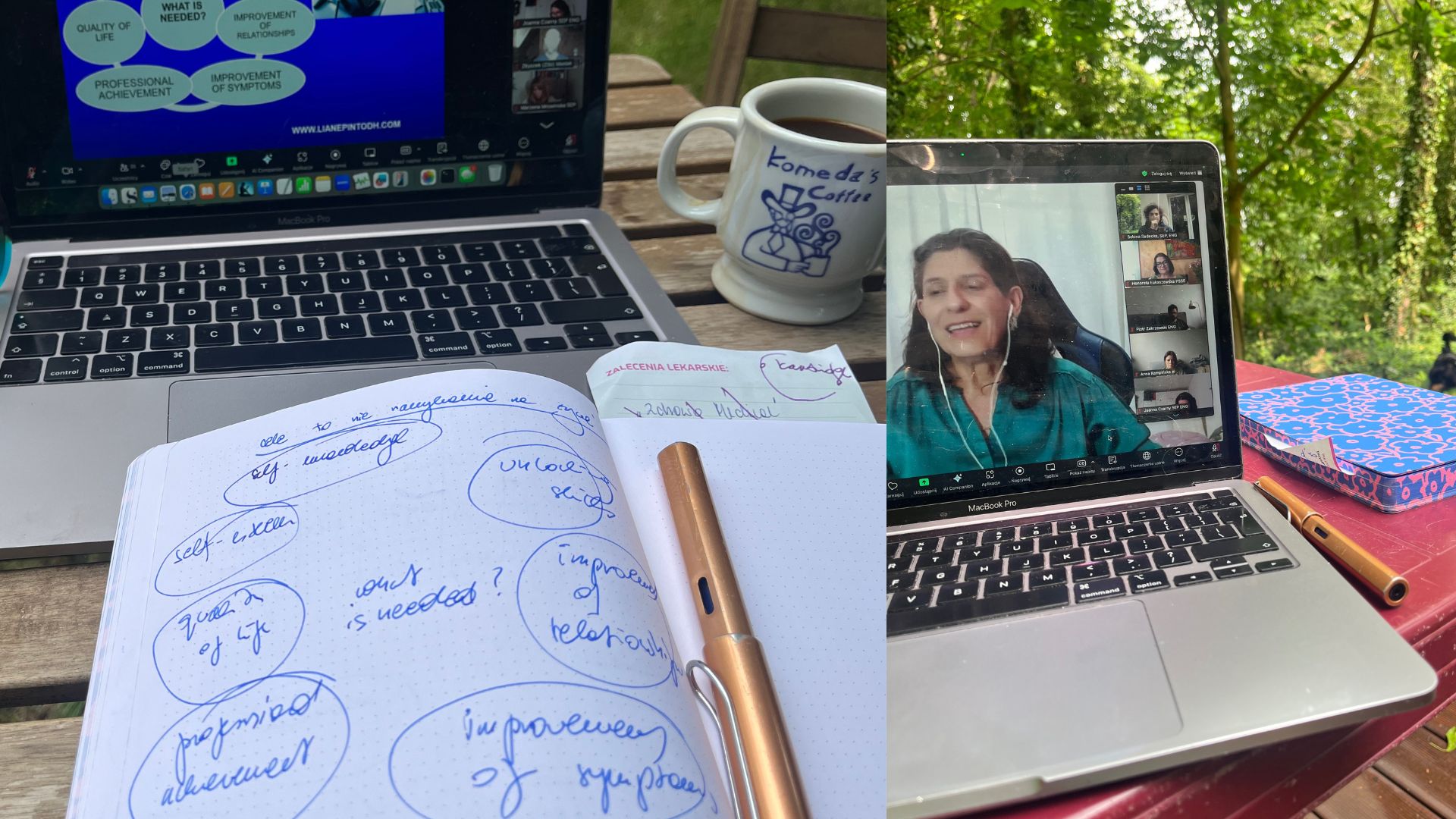
What is unique about the Somatic Experiencing approach is that it distinguishes a variety of trauma categories and shapes the treatment plan around those categories. SE (short for Somatic Experiencing) goes far beyond the two main categories familiar from other approaches to trauma work: simple trauma (shock trauma) and complex (interpersonal) trauma. Here we have, among others, the trauma of physical injury, GHIA (a state of extreme activation after trauma), the trauma of inescapable attack, the trauma of natural disaster, and emotional trauma.
Yesterday and today I had the chance to learn about the specifics of the individual trauma categories, and about how to outline a plan of therapeutic interventions for them, from Liane Pinto, a Brazilian Somatic Experiencing teacher. I like learning from Liane (you can find my notes from her workshop on medical trauma here). I very much like her clinical background (not every SE teacher is a psychologist or psychotherapist, whereas she is a clinical psychologist with a great deal of experience) and the way she weaves inspiration from other schools of psychotherapy into what she teaches (among them the Jungian perspective, emphasizing that the somatic work done in a session is later integrated in dreams).
Here are a few of my notes from the training with Liane. Perhaps they will inspire you, too, in your work or in your life:
- a client’s therapeutic goals can change over the course of psychotherapy; a person who discharges stored post-traumatic activation (trapped in the body) may begin to formulate their therapeutic goals quite differently than at the start of therapy;
- sometimes therapy touches our deepest shadows, and it may then happen that more themes to work on emerge during psychotherapy than we had at the beginning;
- we recognize a specific category of trauma by the symptoms, not by the description of the traumatic event;
- low (or unstable) self-esteem is almost always linked to developmental trauma;
- it is important for the therapist to acknowledge the client’s suffering before starting to ask questions about it;
- as a therapist, don’t work with the traumatic charge held in the client’s eyes in the first sessions; the eyes store many traumatic memories, implicit ones among them;
- a “new” trauma sometimes makes a reparative experience possible in relation to an old trauma; how we and the people around us respond to the new trauma can “repair” the old wound;
- when we experience a state of extreme activation after trauma (the GHIA state), what comes from inside (e.g., terror in the body) gets mixed up with what comes from outside (e.g., a neighbor’s dislike);
- working with a state of extreme activation after trauma (the GHIA state) means, above all, focusing on supporting the client in being present in the session and in their own life;
- self-compassion is also very important in work with GHIA <3;
- we do not renegotiate trauma while the body still bears (physically) unhealed wounds;
- survivor’s guilt allows us to be emotionally closer to the people we have lost (this was a very important thought for me).
Thank you, Liane, and thank you, PSSE for organizing the training!
And thank you for always being here with me <3
Sabina