I have recorded an episode of the podcast “Ładnie o traumie” for you, on whether working with trauma can be dangerous for the people who work with trauma.
In it I talk about, among other things:
– how poorly it serves us to ignore trauma or to demonize it (and that trauma confronts us with extremes, and trauma therapy can be like that too);
– that being exposed to another person’s extreme, unprocessed psychophysiological states (terror, panic, shame, etc.) can leave a mark on our own — the psychotherapist’s — nervous system;
– how the map (representation) of our world changes when darkness dominates our work;
– that working with trauma is above all working with resilience (and let’s never forget that!);
– that we need intention, structure, and boundaries in a trauma therapy session (so as not to let the darkness spill over into places where it shouldn’t);
– how much our own wounds come to the surface in therapeutic work (and in working with trauma most of all);
– that we need lightness in this work, and after work we need to fritter away time and stare at ducks  .
You will find the podcast on Spotify; it is called “Ładnie o traumie.”
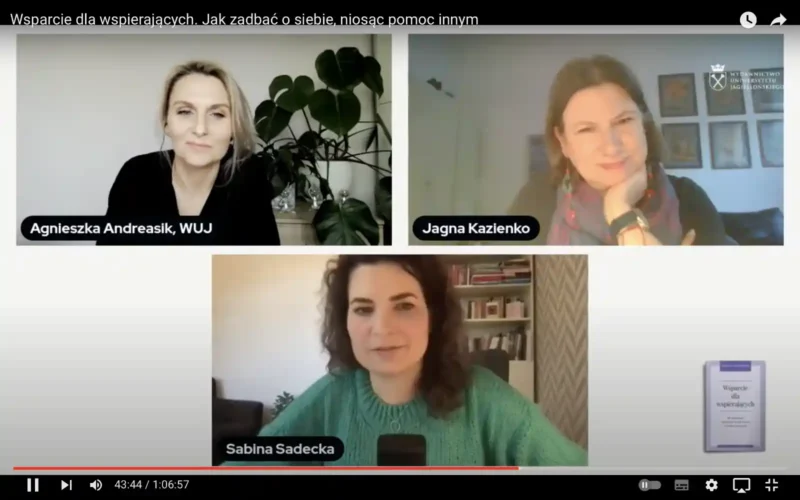
The episode was made in collaboration with @wydawnictwo.uj , which quite recently published a wonderful book for people who do therapeutic work, “Help for the Helper” by Babette Rothschild  (I recommend the book to you very highly, and I talked about it, among other places, here).