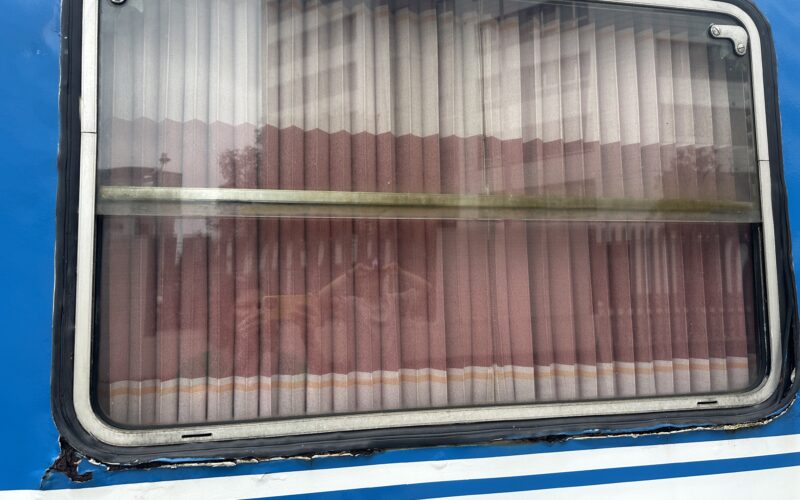
Being stuck, unable to move, caught in an ambush — these are common elements of stories about a traumatic situation. A traumatic trap can be objective (being stuck in an elevator in a burning building) as well as subjective (“my life situation seems to have no way out”). It can be episodic (with a beginning and an end) or chronic (“I feel like this will never end”).
Immobility under stress is an enormous burden for a human being. Our basic survival mechanisms are always tied to movement (physical or mental)*. When something dangerous is happening, our body or our mind speeds up in search of ways out of the difficulty. A situation in which any movement toward rescue or toward solving the problem is impossible is deeply disorganizing for our inner systems. This is especially true of long-term stuckness that accumulates and entangles us more and more. Being stuck like this can have a destructive effect not only on our body and psyche, but also on the deepest layers of our identity (“who am I?”, “am I still who I was a few years ago?”, “am I fully human?”).
For our psyche, a trap can be:
– War, or a terrorist, social, or political threat, unfolding close to where we live
– Bullying or workplace harassment (in a situation where I feel I have no way of changing schools or jobs)
– Being recorded, spied on, followed, or controlled
– Experiencing online hate (because whatever we do, it’s hard to stop a wave of hatred that multiplies with every hour)
– Contracting a dangerous virus or receiving a difficult medical diagnosis (the body then stops being a safe environment to live in, and yet we can’t escape our body)
– Taking a medication that we need to survive but that at the same time takes away part of our health
– Experiencing psychotic symptoms, including as a result of insomnia, psychoactive substances, or extreme stress (our head then stops being a safe environment to live in, and it’s hard to escape your own head, too)
– Loss, grief, the death of a loved one that we cannot come to terms with (and although reality stops being a safe space to live in, reality is hard to escape, too)
– Experiencing abuse in a romantic relationship, being intimidated and cut off from the resources that would allow us to leave that relationship
⁃ Our difficult past, which — whatever we do — we will never change (moral injury).
The more our psyche perceives a situation as having “no way out,” the stronger our dissociation will be — our awareness drifting away from reality, numbing, fantasizing that doesn’t serve us, intellectualizing, escaping into addictions (to substances, behaviors, people), behaving irrationally (for example, aggressively). When reality becomes unbearable, we can carry it only in small portions, and sometimes we have to cut ourselves off from it completely. To heal, however, we need inner movement, access to resources, and to stay at least a little bit with our reality. Inner fragmentation and acting out, instead of calmly responding to difficulties, only multiply our suffering.
Unfortunately, there is no algorithm for developing a constructive stance toward the sense of being stuck, trapped, or existentially immobilized. Below, though, you’ll find a few points to get you off to a good start. Maybe at one of them you’ll feel a stirring, discomfort, or surprise in your body — that’s an important clue; linger at that point a little longer. And carry that reflection or that stirring onward. Take one step at a time. Toward inner freedom.
- Acknowledge that you are in a psychological or real trap. Don’t run from it. Name it. See whether your body can rest a little once words begin to reflect reality instead of covering it up.
- Where there is no possibility of solving something, reversing the course of events, or trading reality for a kinder one, what remains is our inner attitude toward what we cannot change. What stance can you take toward your situation now? How can you be as supportive of yourself as possible in this situation? Can you stop arguing with life and make your life, just as it is now, more bearable for yourself?
- Although reality is pushing back against you, no one can take away your inner spaciousness. Freedom comes from acknowledging external reality and choosing how you will respond to it. How can you respond rather than react impulsively?
- Take care of your intention and your energy. If, for example, I complain constantly — with what intention am I doing it? How much energy does it take from me? What matters most to me right now in this situation, what do I want to protect? Where do I most need to redirect my energy?
- You are not alone in being stuck. The experience of being trapped, of being unable to make a move, is a universal human experience. But being stuck does not mean lifelessness. It is one of the situations that help us grow the most on the inside. Allow yourself to grow around your stuckness (rather than shrinking and running from it).
- We learn from one another, especially in situations with no way out. What can you learn from people who are going through difficulties similar to yours? What can you teach the people around you?
I’m rooting for you in this process!
Sabina
*When movement is impossible, survival mechanisms linked to the fragmentation of consciousness or to immobility (e.g., freeze) are activated.