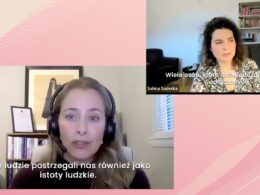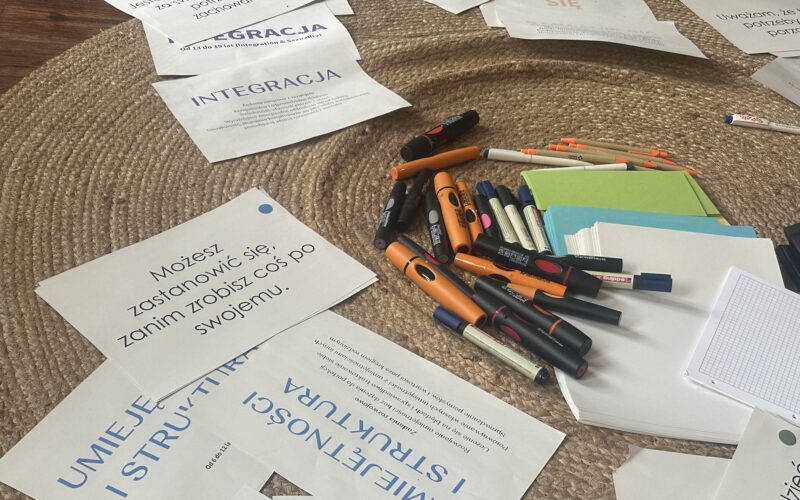
Joanna Krajewska, co-founder of a place with the beautiful name “Dialogi i Zmysły,” is an outstanding transactional analyst and, in private life, someone very dear to me. She never invites just anyone to lead her workshops. Every event she organizes is an intellectual, relational, emotional, and aesthetic feast. This workshop was no exception. It can’t be captured in words in its entirety, but let me pull out a few important thoughts for you.
- A life script is an unconscious life plan that contains the feelings we have permission to feel and the ones we block. Whether or not we feel certain inner sensations shapes our beliefs about ourselves, others, the world, and our work. We often live our lives within the brackets of our script without even suspecting that life could be about something more.
- There is nothing wrong with having a script. A script also holds resources (knowledge of how our world used to work). What matters, though, is to recognize, acknowledge, and somewhat widen the options it imposes on us.
- A script has the potential to keep evolving.
- What the first 19 years of our life looked like will affect everything that happens afterward. The phases of those first 19 years (their stuck points, deficits, and resources) will be repeated again and again (unless we acknowledge what happened for us in those phases and decide to tend to the deficits they left behind).
- Every time we enter a new situation, we need to settle into it (a buffer zone).
- An important question for a therapist (and not only for a therapist): “In which phase of emotional development was this person not sufficiently supported?”
- “Was this person able to grow at their own unhurried pace, or did someone try to speed up or slow down their growth?”
- “Did this person have the chance to experience that their actions have consequences in the inner, outer, and social world?”
- “Was this person supported in experimenting and/or in failing?”
- “Could this person be compared to others without being judged?”
- “Has this person allowed themselves to check whether the values of the home they grew up in fit their own life?”
- “Did they have a chance to say goodbye to something before starting something new?”
- Identity is born within limitations.
- When a community has a prohibition on contact with spirituality, it enters into excessive contact with the academic.