I believe this is one of my most important books.
Shame is by far the most destructive aspect of emotional abuse, and it can be the hardest to heal.
Some researchers suspect that emotional abuse may contribute to the development of illnesses such as chronic fatigue syndrome or fibromyalgia.
quotes from the book
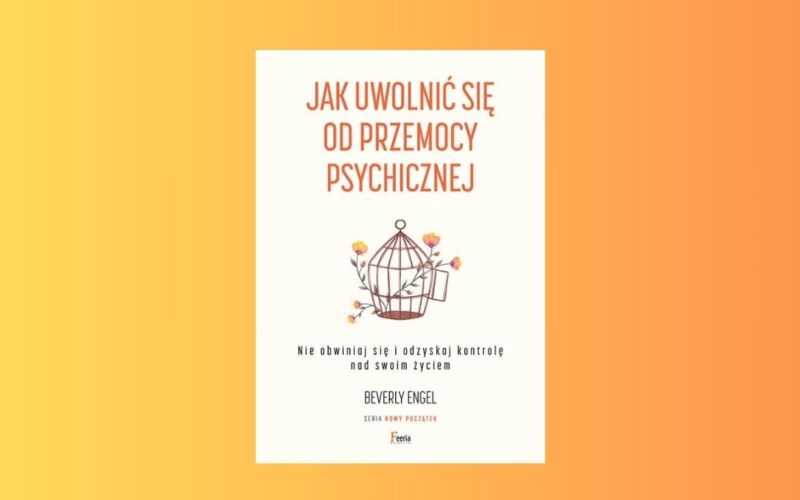
“Escaping Emotional Abuse”* by psychotherapist Beverly Engel is a book about how, no matter how long the world (or, more precisely, the abuser) has been teaching us that we are worthless, we have never — not even for a moment — lost our right to live in a way that is safe, creative, and satisfying. It is a book about how learning to be in a healthy relationship never ends, and how it can begin at any moment, even exactly AT THIS MOMENT, as we read these words.
Beverly Engel explains to us in detail what strategies abusers use to distract us from the fact that abuse is happening at all. In her book she lists partner behaviors that may at first seem innocent to us, but which over time make us prisoners in our own relationship (these include, among others: the partner’s high expectations of us, character assassination, creating chaos and crisis situations, constant criticism, perpetual blaming, invasion of privacy, and so on and so forth). The author sums up these behaviors with the words: “emotional abuse can be compared to water torture. The first few drops falling on your forehead won’t upset you, but the ones that follow will start to throw you off balance. You will be constantly waiting for the next drop to fall. Your sensitivity threshold will shift so much that you will feel every subsequent drop as if liquid fire were dripping on you.”
Yet calling abuse abuse is only a precondition (though of course an indispensable one) in the process of healing. In her book Beverly Engel goes much further and shows us how to fight for our well-being and relational health in a seemingly hopeless situation. Step by step, she leads us from the disorientation of abuse to resilient reorientation, from shame to creativity and agency, from endlessly repeating the same interpersonal patterns toward defining our relational history anew.
“Escaping Emotional Abuse” is a book full not only of explanations along the lines of “how did I even end up here,” but also an inventory of solutions that help us get out of being stuck in abuse. These solutions are not easy to put into practice, and they may expose us to discomfort, but they are nothing compared with the risk that comes with staying in an abusive relationship. For those who nevertheless decide to stay in such a relationship, the author has also prepared a chapter on how to stay in an abusive relationship and protect yourself.
It is a book written in a way that is tender and at the same time very practical, even task-oriented. I have a sense that it is precisely this mix that lets us get moving when helplessness and suffering have made themselves at home in our lives: to be neither cruel nor indulgent toward ourselves, and to act, act, act…
I highly recommend this book to you (and to your loved ones entangled in unhealthy relationships)!
Sabina Sadecka, psychotherapist, trauma therapy teacher, creator of the podcast “Ładnie o traumie” (Spotify), creator of educational content and webinars on psychology and psychotherapy at sabinasadecka.com. A university lecturer, she works in private practice and at a public clinic for people who have experienced trauma in Poznań.
If you would like to buy the ebook, the bookstore Woblink has prepared a discount code especially for you: “Sabina25,” which gives you 25% off the regular price. The code will be active until August 1, 2024.
These titles will also make a wonderful complement to “Escaping Emotional Abuse”:
- Theresa Comito (2021), Przemoc, której nie widać. Jak rozpoznać i przerwać cykl przemocy psychicznej. GWP.
- Joanna Flis. (2023), Co jest ze mną nie tak? O życiu w dysfunkcyjnym domu, środowisku, w Polsce i o tym, jak sobie z tym (nie) radzimy. Znak.
- Judith Herman. (2020), Trauma. Od przemocy domowej do terroru politycznego. Czarna Owca.
- Karol McBride, (2008), Wsparcie dla dorosłych córek narcystycznych matek. Jak być wystarczająco dobrą. Wyd. Feeria. Przeł. E. Józefowicz. We also have a 25% discount on this book at Woblink, with the code “Sabina25.” The discount is valid until August 1, 2024.
- Pia Mellody, Toksyczna miłość. I jak się z niej wyzwolić. Czarna Owca.
- Kim Scott, (2023), Toksyczne miejsce pracy. Warszawa: MT Biznes. Przeł. M. Kowalczyk.
- Arabi Shahida, Wysoko wrażliwi w toksycznej relacji. GWP.
- Chris Willard, Ch. (2024), Odzyskaj swoją siłę. Jak praktykować samowspółczucie i dbać o rozwój po traumie. Publicat. Przeł. K. Krzyżanowski
*I reviewed this book as part of a barter collaboration with the bookstore Woblink.